Building UX team from scratch
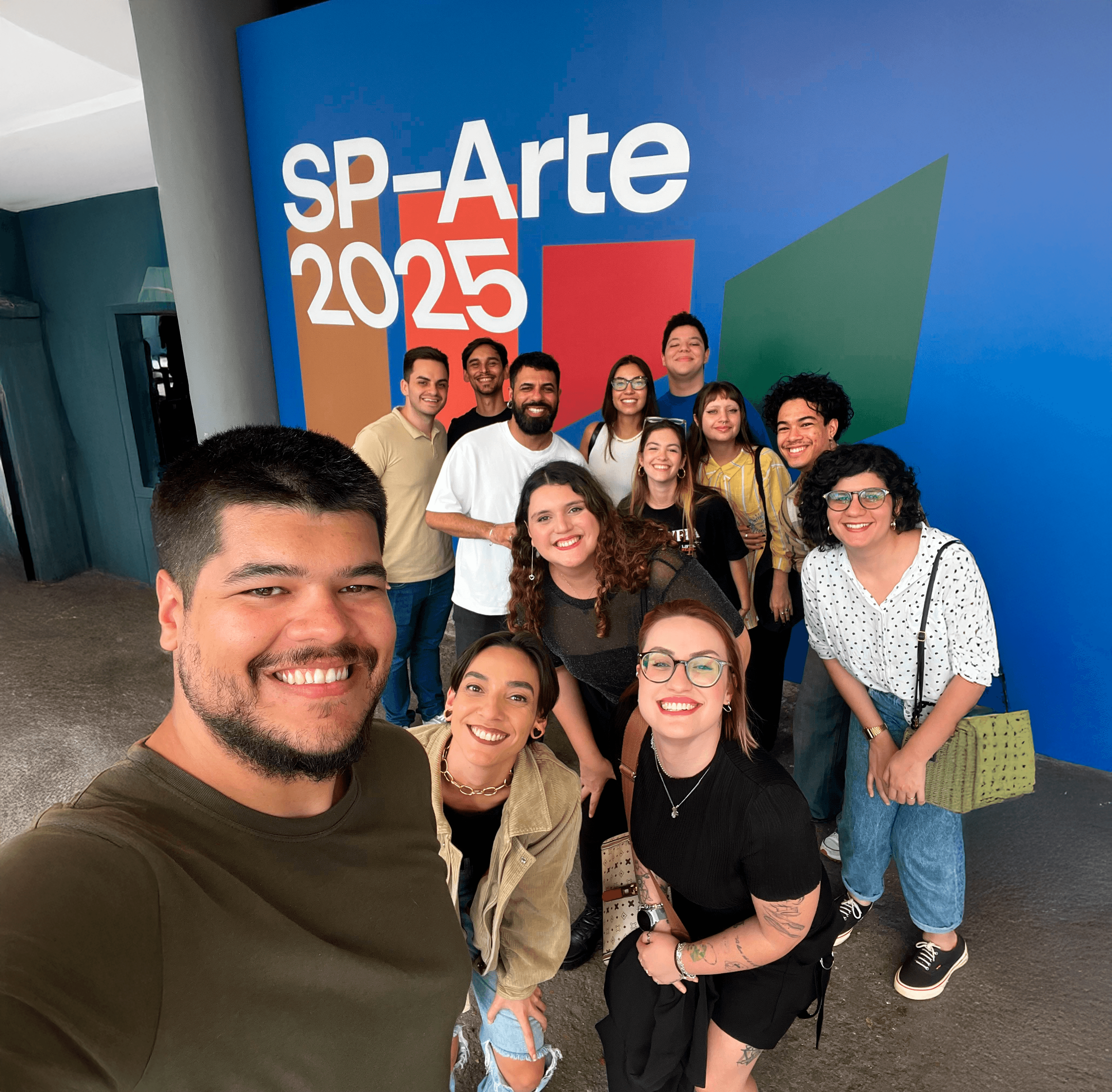
All Vitabe designers at SP-ARTE 2025.
Company
Role
Team
3 designers
and 2 Devs
Timeline
Resume
Problem
A company scaling fast with no UX structure, where design was treated as a visual layer — causing rework, misaligned deliverables, and experience inefficiencies quietly eroding conversion and retention.
Solution
UX built from zero through earned trust: starting with a real team problem, then gradually formalizing processes, a design system, and a team — all connected to measurable business outcomes.
Results
-57%
Task Execution Time
-33%
Technical Rework
Full Story
Overview
This project represents the creation of the UI/UX team from scratch at Vitabe, a fast-growing beauty and wellness company, over a three-year period. When I started, the company was about two years old and strongly focused on sales and customer acquisition, with no formal design processes applied to its digital products.
I initially joined as a visual designer, working mainly on marketing, paid media, and printed materials. In the digital environment, there were no UX processes, no user research, and no clear usability standards — interfaces were created based on visual references and delivered as static files.

Working on projects at Vitabe’s office.
Problem
As the operation scaled, the limitations of the existing model became clear. Teams worked in silos, decisions were made without behavioral data, and conversion and journey issues accumulated without a clear understanding of cause and effect.
On the technical side, unclear deliverables led to different interpretations, constant rework, and longer delivery times. On the business side, the acquisition focus left experience inefficiencies quietly compounding their impact on conversion, retention, and profitability.
The challenge was to introduce UI/UX into a low design maturity environment — without imposing heavy processes, disrupting existing workflows, or slowing down execution, while clearly proving value in a practical and measurable way.
Approach
Entry point
Instead of proposing a full process, I changed the delivery approach on a specific request. I replaced static files with a project built around flows, components, and dev collaboration. The immediate result: more clarity, less friction, faster delivery.
Gradual structuring
Without a formal leadership title, I naturally took ownership of UI/UX. I structured clearer handoff flows, defined minimum delivery standards, and introduced usability and journey criteria into interface decisions.
Building processes
A lightweight design system focused on consistency and speed. Regular A/B testing with documented hypotheses. Heatmaps, session recordings, and click analysis. Close collaboration with the performance team to prioritize based on conversion, AOV, retention, and LTV.
Team growth
The team scaled incrementally: first by adding two designers, one entry-level and one mid-level, and later with front-end developers embedded directly in the UX team, dramatically reducing the time between decision and execution.
Solution
"Build credibility through real impact before formalizing any structure. Solve a real team problem first, and use that success to change how design is perceived."
Before
Interfaces built from visual references only
Deliverables as static files
No UX process or user research
Teams working in silos, no usability criteria
Design seen as a visual layer
After
Design system with components and flows
Structured handoff with development
A/B tests, heatmaps, and continuous research
UX connected to business metrics
Design as a central part of company strategy
Every decision considered the company's stage, avoiding unnecessary complexity and focusing on short and mid-term impact.
The strategy was to build trust through consistent delivery before formalizing any structure.
Results
Structuring the UI/UX area had a direct impact on operational efficiency: a 37% reduction in rework and a 57% decrease in execution time, driven by clearer deliverables, better documentation, and stronger team alignment.
Continuous improvements to the purchase experience contributed to higher conversion, improved retention, and more efficient paid media investment — increasing both revenue and profitability. This set of initiatives helped position the company's main product as the best-selling collagen in Brazil, in a highly competitive market.
-57%
Task Execution Time
-33%
Technical Rework
4 years
from no UX to Brazil’s best-selling collagen
Key Learnings
Building a UX team is less about formal structure and more about creating trust, alignment, and consistent results over time. Processes only add value when they solve real problems.
UX becomes stronger when it is directly connected to business metrics and starts guiding strategic decisions — not just visual outputs.
Leading in low-maturity environments requires strong context awareness, pragmatism, and a focus on real impact before any formalization.
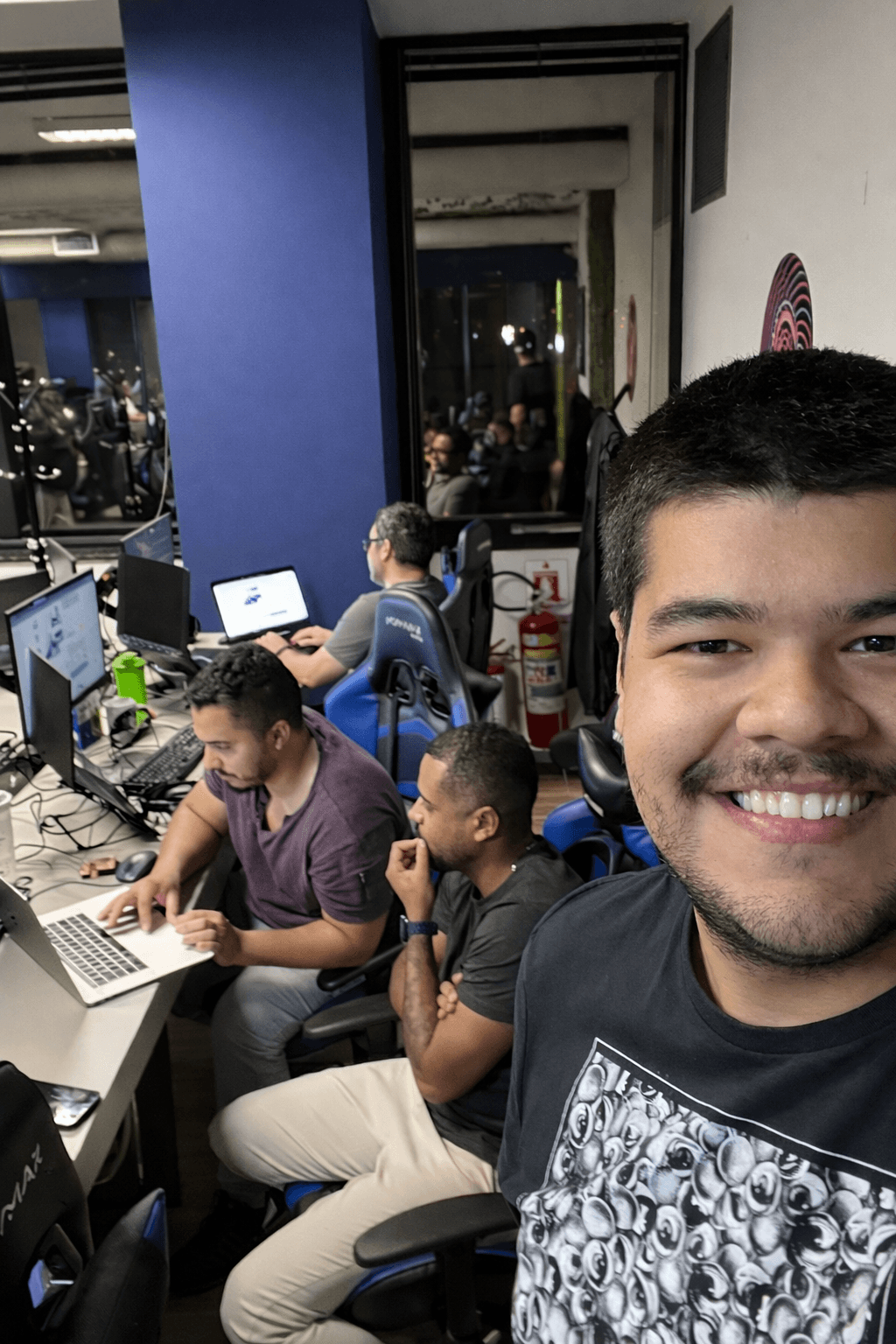
Late-night collaboration with the technology team.
