From Zero to MVP
All-in-One CRM
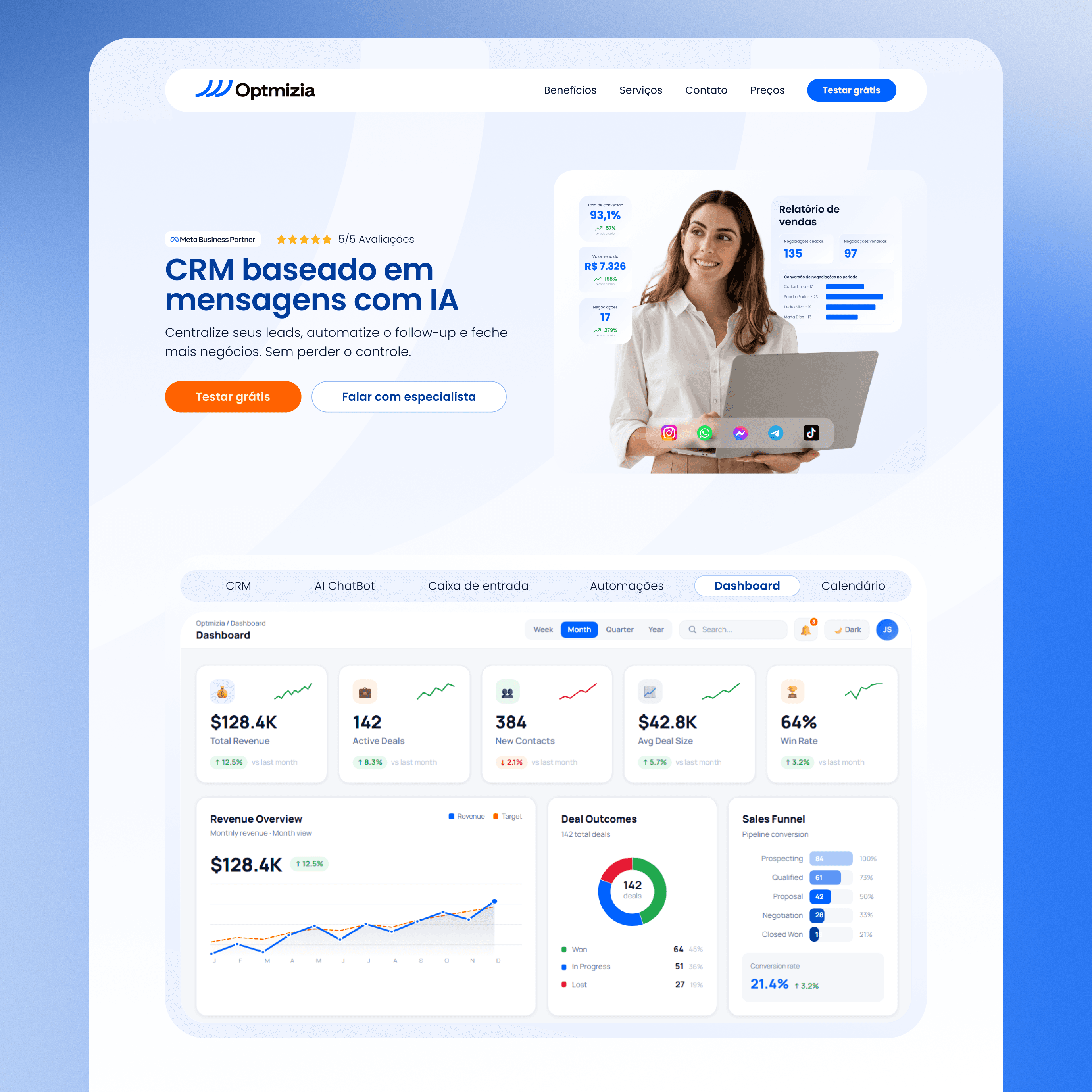
Optmiza's landing page
Company
Role
Team
PD and
Full-Stack Dev
Timeline
Resume
Problem
Small and mid-sized businesses were losing leads silently. No tracking, no standards, no visibility. Most had already tried a CRM at some point and walked away because of the complexity.
Solution
An all-in-one CRM with integrated AI, built specifically for SMBs. Consultative setup included, a clean and focused interface, and visible results within the first few days. The product was shaped by direct conversations with small business owners, before a single screen was ever designed.
Deliverables
MVP with 80% complete
Value proposition documented
Visual identity and design system
Landing page structured to convert
Product based on real research
Full Story
Overview
Optmizia was born from a direct observation: small business owners manage their leads in completely improvised ways.
Whether through WhatsApp, Instagram, spreadsheets, or handwritten notes. Each salesperson doing it their own way, with no tracking and no standard process.
The result is predictable. Forgotten leads, follow-ups that never happen, and deals lost in silence.
The project emerged as an independent initiative, co-founded with a Full-Stack developer. My responsibility covered everything on the product and design side: strategy, research, positioning, identity, design system, and user experience across the platform.
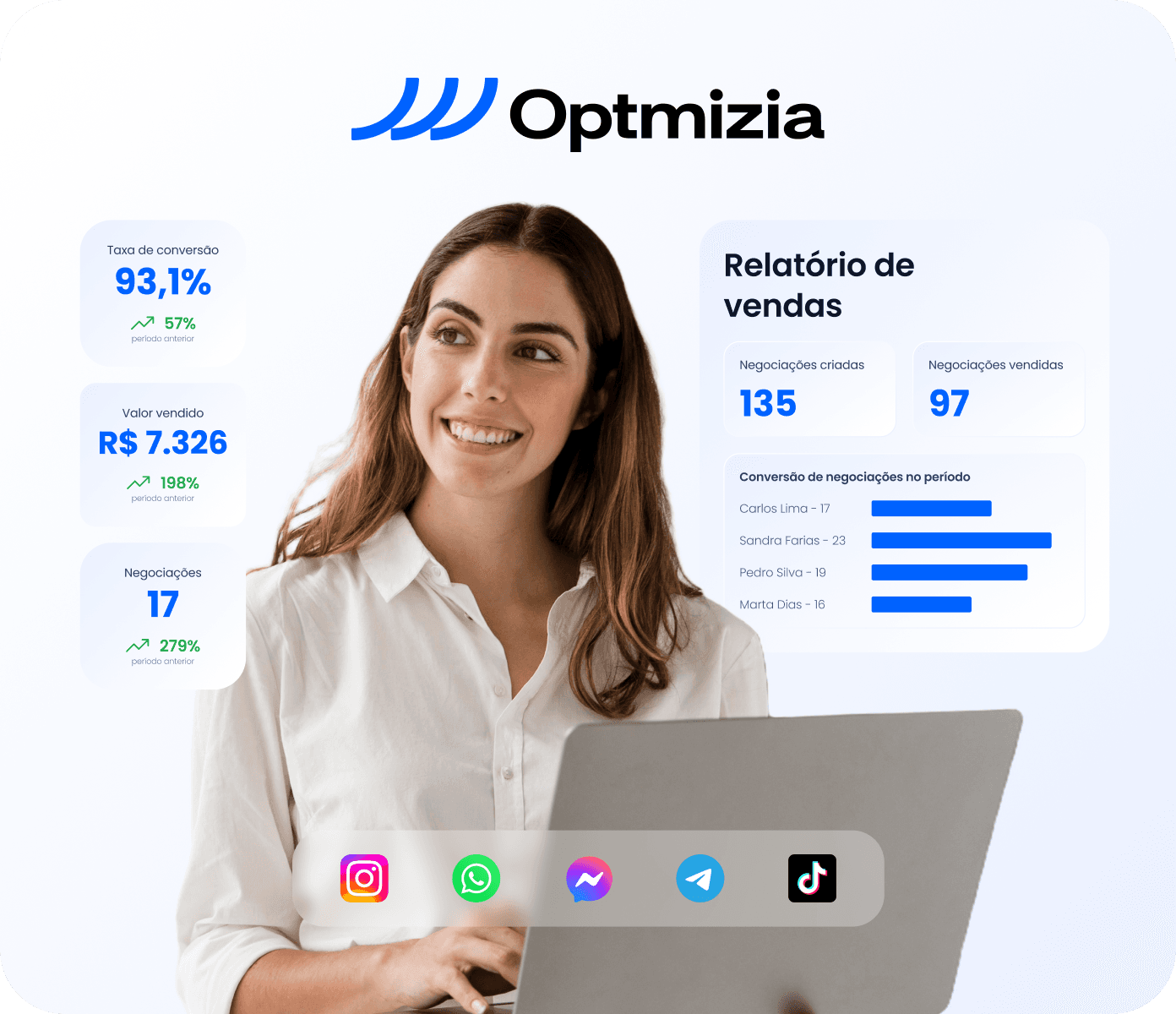
Businesswoman successfully managing leads
Problem
Over two weeks, I conducted individual interviews with 7 small business owners across different segments: marketing agencies, health clinics, and service providers. Each session followed a semi-structured script focused on how they currently tracked leads and where they felt the most friction. The pattern emerged quickly and consistently across every conversation.
The project did not start out as a CRM solution. The original idea was an AI-powered customer service platform. Before moving forward with development, we decided to talk directly with the audience we intended to serve.
"We lose a lot of leads because you just can't keep track of everything. There are so many entry points. Sometimes we just miss them or forget. I don't even know how many sales we've let slip by."
Carlos Marques | Business owner
That same sentiment came up in different forms in nearly every conversation.
We also ran a competitive analysis. The accessible tools failed to cover the full sales process. The ones that did cover it were far too complex for this audience. The market offered nothing that was both accessible and complete at the same time. That space was wide open.
The new version of the product was shaped by the voice of potential users, not by internal assumptions.
Approach
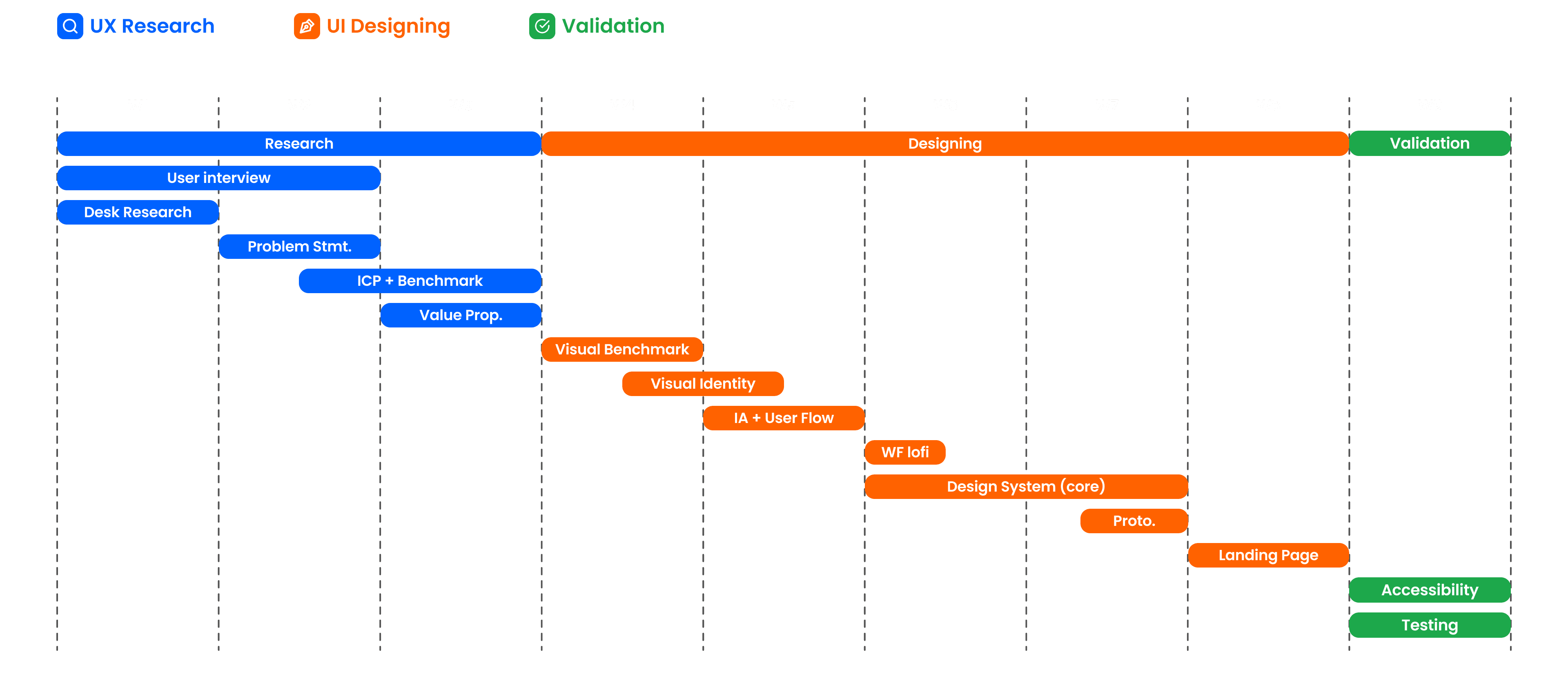
Process timeline
Qualitative research
Rounds of conversations with small business owners across different segments. Not a single screen was drawn before the problem was thoroughly understood.
Value proposition and ICP
I formalized the ideal customer profile in a strategic document that would guide every decision in product, design, and communication going forward.
Benchmarking competitors
I mapped the main competitors in the market. The gap was confirmed: accessible or complete, never both at the same time.
Visual id. and design system
I developed the brand identity and a complete design system before any interface work began. Color tokens, typography, spacing, and components all documented.
Landing page
Designed to balance what the product is today with what it will become. The content hierarchy answers, in sequence, the questions the ICP asks before making any decision.
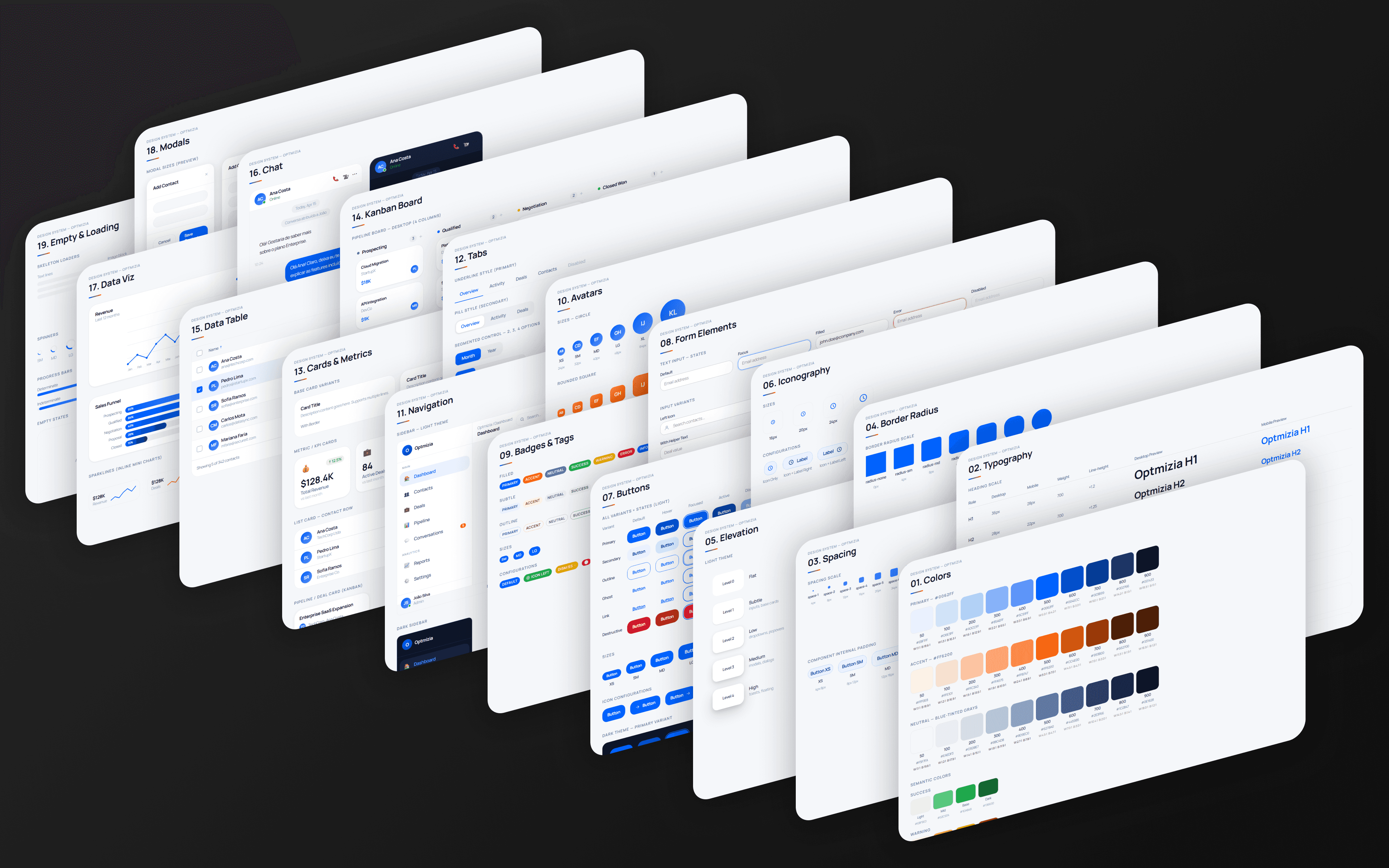
Optmizia's Design System
Solution
"SMBs do not adopt CRM because the available tools were built for larger companies, with IT teams and time to configure everything. A simple product with assisted setup and visible results in the first few days has a real place in this market."
The three pillars of differentiation
Leads, conversations, sales pipeline, AI, and analytics in a single platform. No need to connect multiple tools to get a complete view of the sales process.
Configuration is done alongside the client, by real people. This pillar eliminates the main reason CRM adoption fails, which is the complexity of getting started.
A clean interface with no excess, results visible within the first few days, and pricing that fits the budget of a growing business.
The central trade-off
We used a ready-made component library for the platform interface. From a UX standpoint, that is a real concession. Generic libraries produce interfaces with little depth, purpose, or personality. But it was the right choice for where the project stood. It accelerated MVP delivery and freed up energy for what was truly fundamental: validating the value proposition and making sure the product worked for the right user.
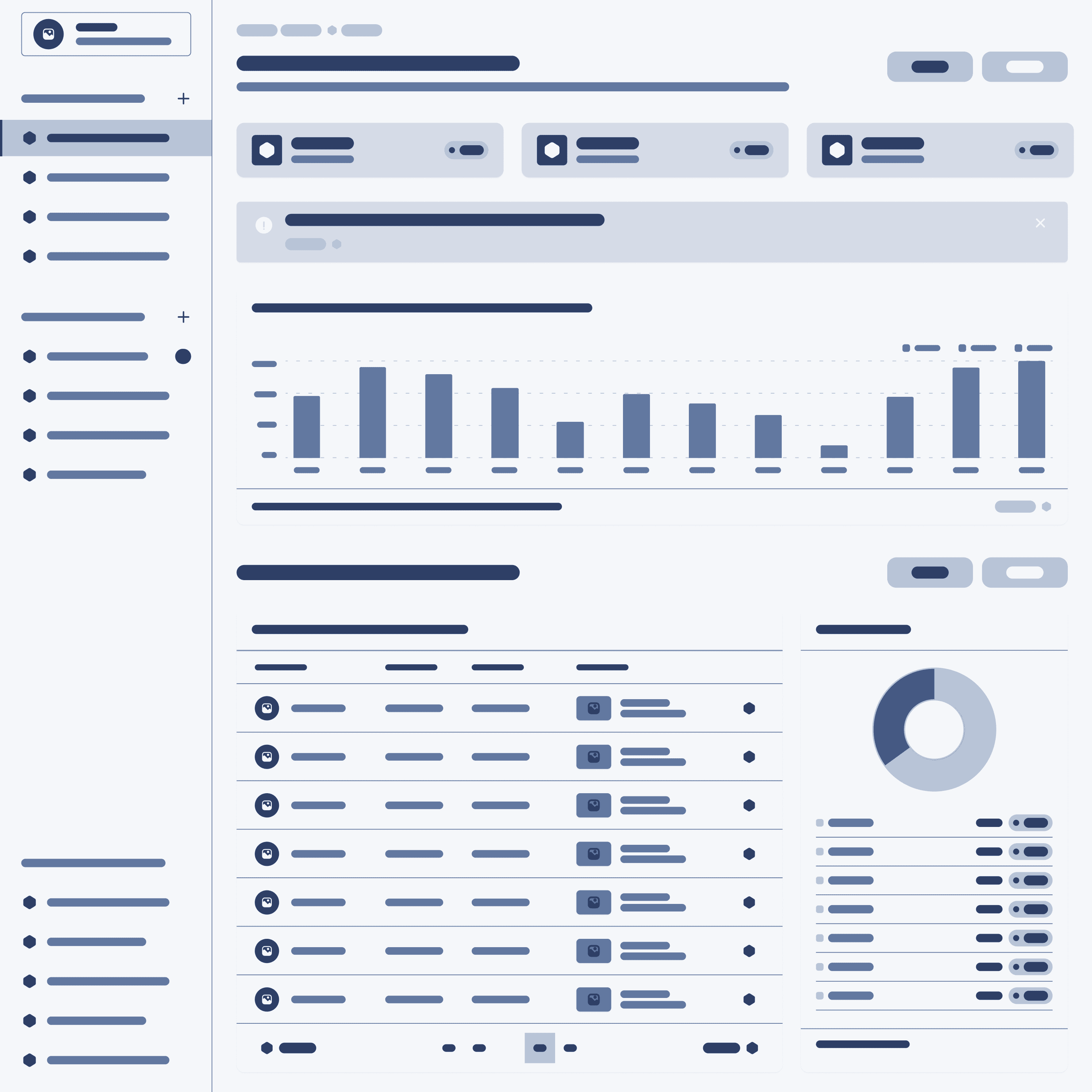
Mid-fidelity wireframe for WebApp
Deliverables
The MVP is in the validation phase, with approximately 80% of development completed. Quantitative results will be collected and documented during the beta user acquisition phase, which kicks off with the landing page Iaunch.
What already exists as concrete output from the process:
MVP with 80% of development complete
Value proposition documented and validated with potential users
Visual identity and design system ready to support the product's growth
Landing page structured to convert the ICP with the right message
Product repositioned based on real research, before a single line of code was written
Key Learnings
Research before screens is not a principle. It is a cost decision. Pivoting before development kept the cost of change low. The same insight after coding would have meant rebuilding from scratch.
The decision to pivot felt natural because the process was sound. The research happened before development, when the cost of changing course was still low.
Generic components can be the right UX call. The trade-off compressed MVP delivery. The learning: the right design decision depends on where the project stands, not on what is ideal in isolation.
Two hats change how you decide. Every design choice carried a business consequence. That dual perspective made the reasoning behind each decision more explicit and harder to ignore.
This case is still open. The results from the beta phase will be the next chapter.
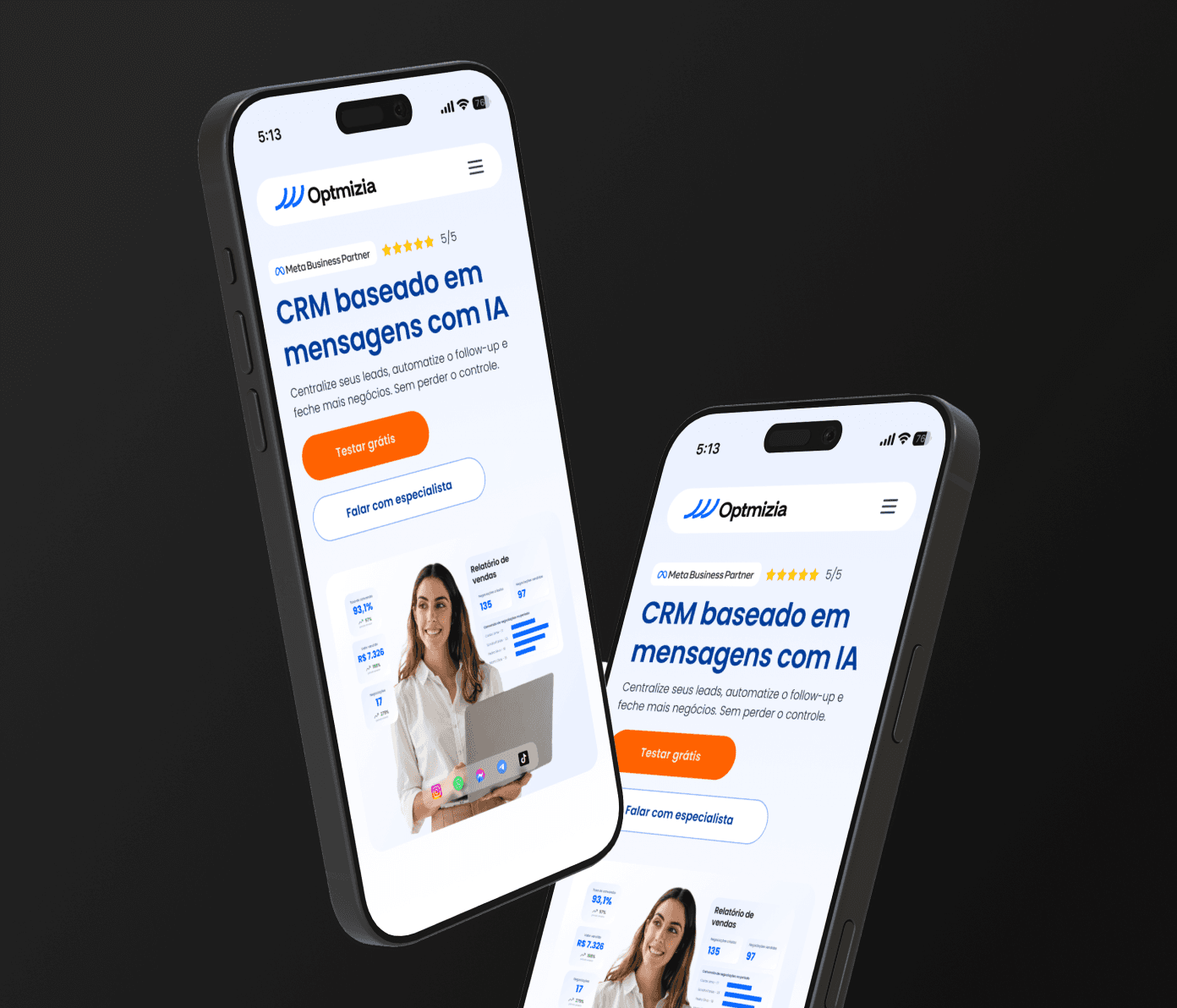
Landing page mobile version

Desktop version of Optmizia's landing page
